





WELCOME TO BAVARIAN-BONDAGE
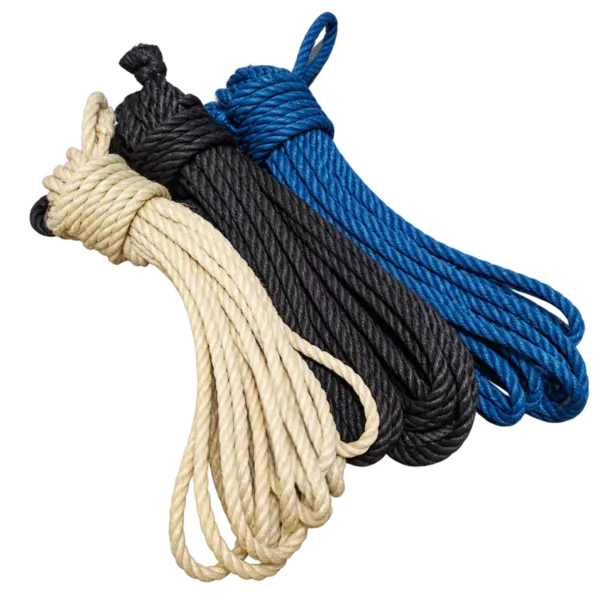
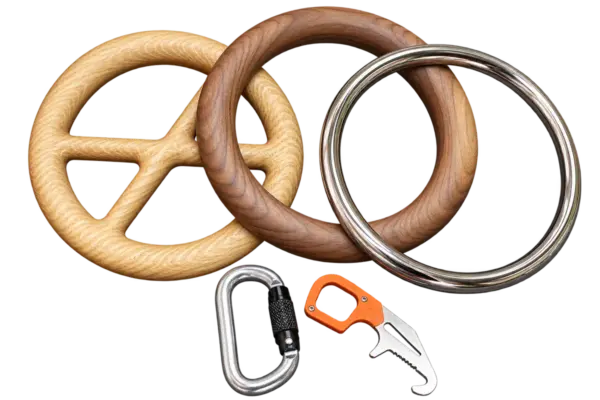
Flax and jute ropes, handmade accessories and carefully selected products – with experience, care and passion.
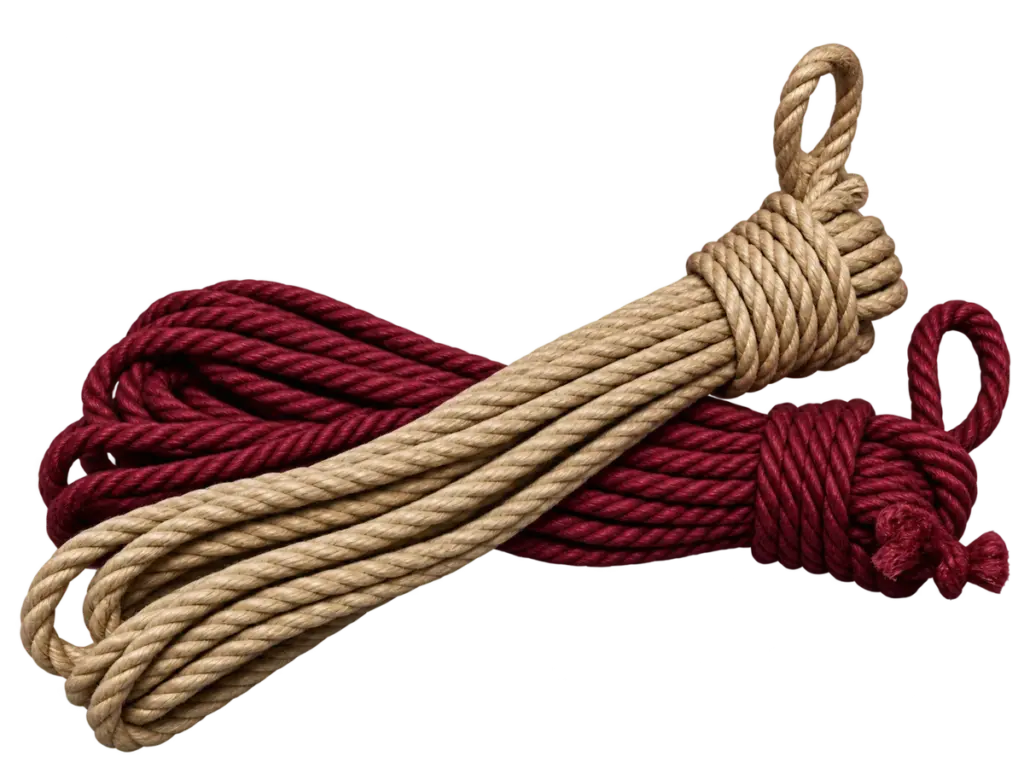
Explore Bondage ropes & accessories

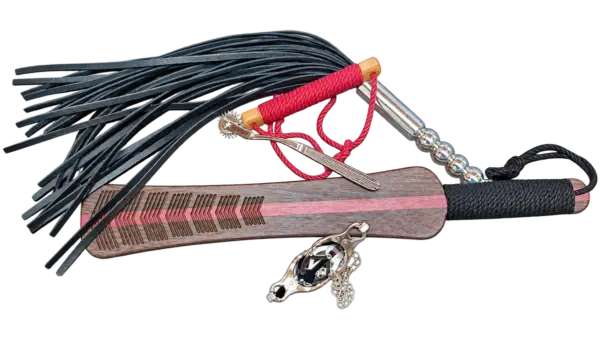
Explore our selection in the pleasure and pain category.
ABOUT BAVARIAN-BONDAGE · THE FULL STORY
personal, carefully selected and made with passion · since 2016
My name is Andreas, and Bavarian-Bondage grew from a personal passion that still guides me today.
I have been involved with Bondage and Shibari for many years. What began as a personal interest gradually became the idea of sharing knowledge and offering products I can truly stand behind.
Carefully selected, not vast. Personal, not anonymous.
Best wishes · Andreas
THE FULL STORY
Choose a topic to learn more about our story, our work and the people behind it.
Since 2017, I have regularly attended fairs and events.
Direct contact with customers is especially valuable to me. Many questions are easier to answer face to face than through a product description – and with ropes, it helps to feel the material yourself.
Fairs always bring new ideas. I hear directly what people like, which questions come up often and where something may still be missing.
For me, this personal exchange is now as much a part of the business as the online shop itself.
Our range is deliberately manageable.
I do not want to offer thousands of items just to fill the shop. What matters more to me is choosing products I know, can explain and genuinely believe in – or even make myself.
Some products are tried and stay. Others leave the range. Some are changed, improved or made to my own specifications.
Over the years, this has created a range that is not huge, but is very thoughtfully put together.
Shibari and Bondage workshops in Bavaria have been part of our work from the beginning.
My aim is not to present myself as a “Shibari master” or artist. I want to share experience and techniques in a way that is clear, understandable and practical.
With rope work, books, images and videos can only teach so much. In person, questions can be answered immediately, movements demonstrated and small mistakes spotted much more easily.
For me, workshops are therefore about exchange as well as teaching. Everyone works with rope differently, develops their own style over time and asks different questions. That is what makes them interesting to me.
The first ideas emerged in 2015 around a private Bondage workshop. Initially, the plan was mainly to create a site about Bondage, Shibari, workshops and information.
At the same time, I bought new ropes myself and was far from satisfied. That led to a simple question: why not offer exactly the ropes I would want to use?
Step by step, that idea became Bavarian-Bondage. The project truly began in 2016 – and in 2026 we celebrate our 10th anniversary.
The name reflects a strong connection to Bavaria. The small idea from 2015 has grown into much more – and the name has stayed and become part of it.
Although my name is closely linked to the shop, I am far from doing this alone. My partner Lisa stands beside me and supports all the visible – and especially invisible – work behind the scenes. I am very grateful for that.
Bavarian-Bondage is not an anonymous wholesaler. If you have a question about a product, you reach people who truly know it. That personal contact has mattered from the start and always will.
Looking back on ten years of Bavarian-Bondage, I remember above all the encounters, workshops, fair conversations, feedback, new ideas and people who joined us along the way. A small idea has become a lasting part of our lives.
Customers returning, visiting us at fairs or remembering years later which rope, paddle or suspension ring they bought from us means more to us than having the largest possible range. Ultimately, Bavarian-Bondage depends on the trust of the people who shop with us.
MEET IN PERSON
Bavarian-Bondage will be there in person at three events. Come by, explore our ropes and products, and ask your questions directly.
EVENT 01
6–8 November
2026
EVENT 02
12–14 March
2027
EVENT 03
4–6 June
2027
Further dates may be added.
FREQUENTLY ASKED QUESTIONS
Which rope is right for you? Find clear answers about materials, thickness, length, care and safe use.
For beginners, Bondage ropes with a diameter of 5 or 6 mm are usually the best choice. They offer a good balance of comfortable handling, easy rope control and versatile uses.
Thinner ropes of 3 or 4 mm are less suitable for general beginners. They are mainly intended for decorative use or particularly delicate ties, for example on the face, hair or fingers. At the same time, the thicker a rope becomes, the heavier and less flexible it is to handle. This is why 5 and 6 mm have become particularly versatile sizes.
Jute ropes are considered a classic choice for Shibari. They are light, grippy and give a very direct feel of the rope. However, jute sheds more fibres and requires a little more care. Depending on use, it may be useful to have the ropes properly singed occasionally and then oiled or waxed again.
For beginners, we therefore often recommend flax ropes. They are supple, comfortable in the hand and much easier to care for than jute. This makes them particularly suitable for developing a feel for the material and for handling the rope.
POSH-Rope (polyester) is an easy-care, washable alternative. It is particularly suitable for use on or in water and may also interest people sensitive to natural fibres. As POSH-Rope does not shed fibres, it may be more comfortable for people sensitive to fibres or dust, including some people with asthma. For classic Bondage and Shibari, however, we generally prefer natural fibres such as flax or jute.
Our personal recommendation for beginners is therefore 5 or 6 mm flax rope. Those who later want the classic, grippy rope feel and are willing to spend more time on care and finishing will find jute an excellent alternative.
Jute, flax and POSH-Rope differ mainly in weight, surface, feel and care.
Jute is a very light, grippy natural fibre and a classic material for Shibari. It gives a direct rope feel but sheds considerably more fibres and needs more care.
In the German Bondage community, the term “Leinenhanf” has become established for ropes made from flax. Flax is also a plant bast fibre and the finished rope usually feels denser, more supple and smoother than jute. Flax ropes shed far fewer fibres and are much easier to maintain.
True hemp is a different natural fibre. We deliberately do not stock it, as its characteristic smell, often coarser feel and comparatively poorer processing do not meet our preferences and standards.
POSH-Rope (polyester) is made from synthetic fibres. It does not shed, is washable and particularly easy to care for – ideal for use on or in water too.
Natural ropes can also vary slightly in colour and surface depending on the fibre and batch.
You can learn more about natural fibres, rope diameters and finishes in our rope guide.
Both 5 mm and 6 mm are very suitable for Bondage and Shibari. The better diameter depends less on a fixed right or wrong than on personal feel and how easily you can handle the rope.
Personally, we often prefer 5 mm for beginners. The slightly thinner rope is often easier to control and comfortable to handle, especially when practising. A 6 mm rope feels thicker and fuller, and many people also enjoy using it.
The person being tied can also influence the choice. On a petite body, 5 mm ropes often look more balanced and less dominant, while 6 mm ropes can look more proportionate on a larger or sturdier build. Conversely, very thin ropes can look a little lost on a large, muscular body. This is mainly a matter of personal aesthetics, however.
Both diameters are equally suitable for many uses. Ropes of 5 and 6 mm can also be used for suspension if they are intended for it, are in perfect condition and are used correctly. Load-bearing ropes should always be routed in multiple strands, never as a single load-bearing strand.
Ultimately, your own preference decides: choose 5 mm if you prefer a slightly finer, more flexible rope. If you like a fuller rope feel, 6 mm may feel more comfortable.
Eight metres has become the standard length for Bondage and Shibari ropes. It is long enough for many different ties while remaining manageable. As rope repeatedly has to be passed through existing wraps, very long ropes quickly become impractical. A 20-metre rope may initially sound versatile, but often means having to pull an unnecessarily large amount of material all the way through again and again.
Four-metre ropes are mainly a useful addition. They work well when only a shorter length is needed, for smaller ties or, for example, simple wrist ties.
For beginners, we recommend a practical basic set of around 3 × 8 metres, plus one or two 4-metre ropes. The reason is simple: depending on its construction, a classic TK (Takate Kote) often already requires two to three 8-metre ropes.
Our large set of 7 × 8 metres and 2 × 4 metres provides extensive equipment for almost all common ties and a good basis for initial suspensions. Anyone practising suspension more frequently or extensively will benefit from having additional ropes available.
Sometimes slightly longer ropes can be useful, for example for certain suspension applications. There is no perfect rope length, however: every tie is constructed differently, and body size, technique and personal working style also matter.
Bondage ropes of 5 or 6 mm diameter are generally suitable for suspension, provided the specific rope is intended for that purpose, is in perfect condition and is used correctly.
Jute, flax and POSH-Rope (polyester) are generally suitable for suspension. Besides the material, the particular construction and condition of the rope are always crucial.
In practice, 6 mm ropes are often used as support ropes or uplines, while 5 mm ropes are popular for the body ties themselves. This is not a fixed rule; it also depends on technique, material and personal preference.
In suspension, load-bearing ropes are routed in multiple strands rather than used as a single strand. This distributes the load across several rope strands. Before every use, check the ropes for visible damage, excessive wear or other irregularities.
With POSH-Rope (polyester), direct rope-on-rope friction at heavily loaded redirection points should be avoided as far as possible, as it can generate frictional heat. We therefore recommend inserting suitable carabiners or other appropriate metal hardware at these points.
Important: our Jute Soft is not suitable as a support rope or upline.
Ropes of 3 and 4 mm are not intended for suspension. They are more suitable for decorative use or particularly delicate ties.
Suspension is one of the more demanding areas of Bondage and should only be practised with appropriate knowledge, technique and equipment.
Care depends on the material. Clean jute only on the surface where possible; remove light dirt from flax with a damp cloth. Thorough washing is not routine care for natural-fibre ropes and can alter their properties.
Use a suitable care oil or wax sparingly on natural ropes, only when needed. Polyester POSH-Rope can be washed gently by hand and needs neither oil nor wax; it must not be singed.
Let all ropes dry completely, store them dry and check them regularly for wear and damaged areas. You can find details in our Bondage rope care tips.
A high-quality Bondage rope is primarily characterised by good material, consistent workmanship and a rope lay suited to its intended use. Extra softness does not automatically mean extra quality. If a natural-fibre rope feels unusually soft, this may be intentional, but it can also result from very intensive treatment or a particularly loose lay.
A new natural-fibre rope also needs time. Regular use usually makes it more comfortable and supple, gradually developing its own feel. Moisture, sweat and the skin’s natural oils also contribute to changes during use. Many ropes therefore feel noticeably better after some time than when brand new.
With natural-fibre ropes, distinguish actual damage from normal manufacturing irregularities. Natural materials are not perfectly uniform. Occasional thickened areas, small inclusions, individual loose or accidentally twisted-in threads, and small loops or knots in the yarn can arise during manufacture. These are not automatically quality defects or necessarily reasons to replace the rope or make a complaint.
The overall condition matters more: the rope should be consistently made along its length, without areas where the structure is clearly weakened, badly damaged or unusually altered.
Finishing also matters. Natural-fibre ropes should be neither brittle and excessively dry nor very greasy or oily. Oil and wax should always be used in a way that preserves the rope’s natural feel.
Ultimately, a good Bondage rope results from the combination of material, rope lay, workmanship, finishing, use and intended application – not simply how soft it feels at first touch.
Choosing natural or dyed rope is primarily a matter of personal taste. With natural-fibre ropes, however, there are some differences worth knowing.
Natural-coloured ropes show the fibre’s original colour. As jute and flax are natural materials, colour may vary slightly between batches. These differences are normal and part of a natural product’s character.
Dyeing places additional stress on natural rope fibres. A dyed natural-fibre rope may therefore have a slightly lower breaking load than its undyed equivalent. For our jute ropes, we allow for a reduction of around 20%, depending on the dyeing; for flax, around 10–15%. An exact figure cannot be given, as dyeing method, colour, material and processing all play a part.
An already twisted natural-fibre rope cannot be dyed right through to its core afterwards without putting the material under considerable stress. Opening or strongly untwisting it may therefore reveal the original natural colour inside. A genuinely through-dyed rope is generally only achieved when the yarn or fibres are dyed before the rope is twisted.
Dyeing can also slightly change the feel. Dyed ropes may initially feel firmer or simply different and, just like natural-coloured ropes, continue to develop with use.
Depending on the colour and dyeing process, a new rope may initially release a little dye. We try to fix the dye as thoroughly as possible. However, rope is much thicker and more densely constructed than clothing, for example, so some dye particles can remain between the fibres. Keep this in mind around light-coloured clothing or delicate surfaces.
For ordinary use, the desired appearance is therefore usually the deciding factor. Choose natural-coloured rope if you want to stay as close as possible to the fibre’s original properties. If you want to incorporate more colour and design into your ties, dyed ropes offer plenty of choice.
Dear customers,
Due to the new EU Packaging Regulation (PPWR), which comes into effect on August 12th, we face significant additional financial and bureaucratic requirements. Therefore, we are unfortunately forced to restrict our shipping to Germany and Austria until further notice.
We hope for your understanding and thank you sincerely for your support. We will of course inform you immediately should the circumstances change.
We use essential cookies to ensure the shop and your shopping cart function correctly and to save your cookie preferences. We only activate statistics and optional external content with your consent. You can accept all cookies, reject optional cookies, or customize your selection under "Settings". You can change your settings at any time via "Cookies".