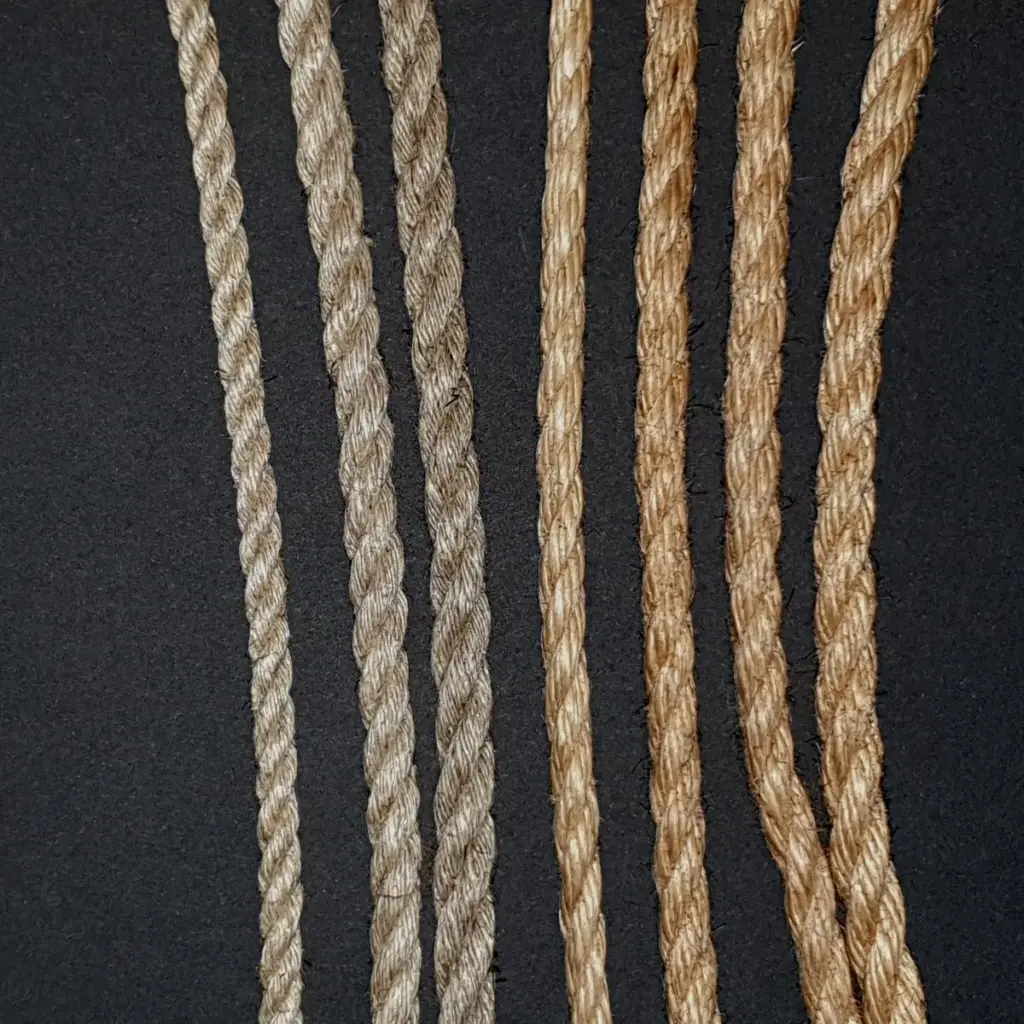
Flax and jute ropes compared

Comparison of different flax and jute rope diameters

Rope diameters compared

Flax: 4 mm · 5 mm · 6 mm

Jute High Class: 4 mm · 5.5 mm · 6 mm

Jute Standard: 6 mm

Our flax ropes are made from flax fibres, while our jute ropes are made from jute fibres. “Leinenhanf” is our product designation for flax rope, not true hemp rope. Material, rope diameter and workmanship together determine how a rope feels and handles.

The comparison shows flax and jute ropes in different thicknesses. The stated diameters are approximate: natural fibres and handcrafted production can lead to small variations.

For example, a Jute High Class rope with a diameter of around 5.5 mm consists of three strands. Each strand is made up of several yarns. The yarn thickness and the rope’s lay affect its final diameter. Subsequent finishing can also change it slightly.

When choosing a bondage rope, material, feel and workmanship therefore matter alongside the diameter.

More guidance on choosing is provided in The rope: material, length and diameter.

KLASSIK and EXKLUSIV: the versions

20171109_125925

KLASSIK: overhand knot

With KLASSIK, the rope ends are finished with a simple overhand knot. The ropes are prepared ready for tying to suit the respective rope series.

Within the same rope series, KLASSIK differs from EXKLUSIV in the end knot. The material, diameter, rope twist and treatment remain the same.

EXKLUSIV: Triskenknoten

EXKLUSIV has a small, firm Triskenknoten at both rope ends. It takes more work to tie and forms a compact finish. These ropes are also prepared ready for tying.

You can find the differences between the end knots and guidance on choosing under KLASSIK or EXKLUSIV?

Bondage ropes from Bavarian Bondage

Not every natural fibre rope is suitable as a bondage rope. Consistent workmanship, well-integrated yarn knots and a pleasant feel are essential. I therefore select my ropeworks carefully and tailor production to the intended use.

Origin and production

My flax ropes, the S-Edition and Jute Standard are made to my specifications at a German ropeworks. Direct communication with the ropeworks is important to me so that workmanship and intended use align.

Jute High Class is produced by several ropeworks worldwide; the supplier is headquartered in Germany.

Knots in the yarn

In twisted natural fibre ropes, individual yarns are extended and joined together. These joins may be visible or noticeable in the finished rope. In a good bondage rope, yarn knots should be small, firm and neatly integrated into the rope structure.

Rope scent

Scent also differs between flax and jute ropes. Natural-coloured flax ropes have a light scent of hay and the care oil used; coloured versions are usually very subtle. Jute High Class has a mild, slightly sweet scent. Jute Standard smells somewhat stronger because batching oil is used in production. How strongly a scent is perceived varies from person to person.

Ready for tying and care

All ropes offered here arrive prepared and finished. New flax ropes may initially feel slightly firm; use loosens the fibres and makes the rope more supple. Washing before first use is not necessary.

Jute ropes may shed more fibres at first. This often decreases over time. Guidance on suitable aftercare and maintenance can be found under Care tips for your ropes.

Regular inspection also includes recognising wear and damage to the rope.

Questions about flax and jute ropes?

Discover our flax ropes made from flax and Jute ropes. The processing of the ropes is explained in From raw rope to ready-to-tie rope.

The respective overview pages provide more information about each type of rope. If you have questions about material, diameter or workmanship, or are looking for a custom-made rope, feel free to contact me.